
THIS AVALANCHE ADVISORY EXPIRED ON March 2, 2022 @ 3:30 amAvalanche Advisory published on March 1, 2022 @ 3:30 am
Issued by
Brian Newman - Gulmarg Avalanche Center
Bottom Line
How to read the advisoryAreas of wind slab at alpine elevation ridgetops on North aspects. Deep persistent weak layer has failed in some places during past Friday/Saturday storm. As of today it has once again gained adequate strength. Be mindful of sudden rise in temperature and sustained warm temperatures on South aspects. Both will have an effect of increasing avalanche risk.

2. Moderate
?
Alpine - 3000 meters and above
Heightened avalanche conditions on specific terrain features. Evaluate snow and terrain carefully; identify features of concern.
1. Low
?
Transistional - Near 3000 meters
Generally safe avalanche conditions. Watch for unstable snow on isolated terrain features.
1. Low
?
Sub-Alpine - Below 3000 meters
Generally safe avalanche conditions. Watch for unstable snow on isolated terrain features.
Heightened avalanche conditions on specific terrain features. Evaluate snow and terrain carefully; identify features of concern.
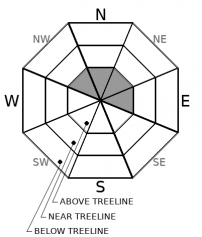
Avalanche Problem 1: Wind Slab
-
Type ?

-
Aspect/Elevation ?
-
Likelihood ?CertainVery LikelyLikelyPossible
 Unlikely
 -
Size ?HistoricVery LargeLargeSmall

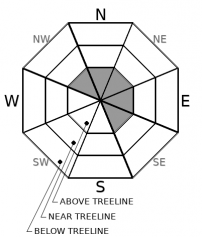
Avalanche Problem 2: Persistent Slab
-
Type ?

-
Aspect/Elevation ?
-
Likelihood ?CertainVery LikelyLikelyPossible
Unlikely
-
Size ?HistoricVery LargeLargeSmall
This avalanche problem is at the bottom of the snowpack. Very large crystals with lots of open space between. Imagine an entire layer of the snowack, 2"-6"or more of this crystal matrix and its weakness in supporting additional layers of snow becomes significant. Where did these large crystals come from? They are the evolution of regular snow flakes which fell out of the sky back in November (one of the coldest months of the year). As these snow flakes accumulated on the ground, they formed the first snowpack of the season. What cuased them to undergo such a dramatic change is due to extreme seasonal conditions generally only occuring at the beginning of winter; extra cold temperatures, extra shallow snow pack, and finally extra time enduring these conditions. So how do we deal with this problem? The bad news is this problem can remain for the entire winter until Springtime melts the snow and the only way to effectively rid ourselves of this weak layer is by avalanches!
Weather and CURRENT CONDITIONS
weather summary

View detailed snow forecast for Gulmarg at:
snow-forecast.com
Disclaimer
This avalanche advisory is provided through a partnership between the Jammu and Kashmir State Department of Tourism and the Gulmarg Avalanche Center. This advisory covers the Pir Pinjal range accessible from the Gulmarg Ski Area. Click here for a map of the forecast area. This advisory describes general avalanche conditions and local variations always occur. This advisory expires 24 hours after the posted time unless otherwise noted. The information in this advisory is provided as public a service. The user of this information accepts all risks and responsibility.


